News
Tue, Mar 24 2026
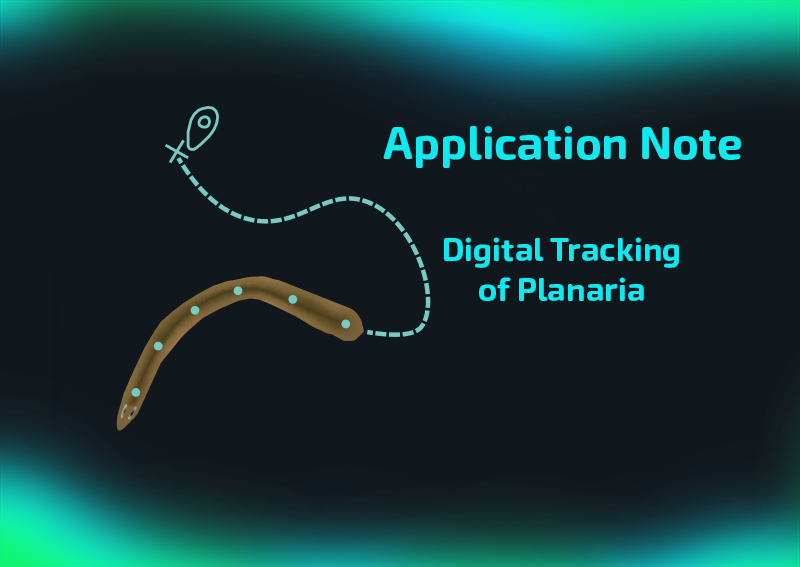
Planaria mobility tox test using LoliTrack v5
Are you planning to use behavior or movement for testing toxicity responses in organisms? Then we highly recommend that you take a look at how LoliTrack v5 can streamline such research.
Manel M. Habel, Adrian C. William and Vitally V. Khutoryanskiy from the University of Reading, United Kingdom, recently published a paper comparing manual tracking methods with LoliTrack v5 digital tracking methods, for toxicological assessment of planarian mobility.
You can find the full published paper of this work here:
Their work demonstrates the greater reliability, precision, and objectivity of LoliTrack automated video tracking and behavior analysis, over traditional manual gridline based methods.
In the study, they compared a traditional manual planarian locomotor velocity (pLMV) assay based on gridlines to our LoliTrack software to assess the distance travelled of aquatic flatworms and demonstrated an overall reduction in locomotor activity in response to the investigated toxicant benzalkonium chloride (BAC) using both assays.
Interestingly, the comparison demonstrated that the tracking using distance traveled compared to the traditional gridline crossing method provides quite different results in the same experiment. This is directly touched on in the paper:
“The use of gridline crossings as a proxy for distance moved may lead to oversimplification and misrepresentation of locomotor activity due to variations in movement trajectories. These limitations underscore the need for a more robust and standardised method to provide precise, objective, and reproducible measurements of locomotion.”
| Manual based assessment as cumulative gridline crossing |
Software based assessment as |
 |
 |
|
Cumulative gridline crossing over 5 minutes for planaria exposed to increasing concentrations of BAC in artificial pond water. Mean cumulative gridline crossings ± SEM. |
Digitally tracked distance moved over 5 minutes for planaria exposed to increasing concentrations of BAC in artificial pond water. Mean distance moved ± SEM. |
 |
 |
| The traditional gridline setup, which involves counting how many gridlines are crossed. |
Zoomed in view of the LoliTrack software tracking a planaria. The line shows the midbody travel distance, and the green dots along the body tracks the midline, to calculate alternate metrics such as bend. |
The article also highlight the abundance of new metrics that can be studied to help quantify other behaviors than just distance traveled. Which can lead to new insights and studies that were previously hard to assess in a reproducible manner.
“Beyond quantification, the digitalisation of this assay allows additional behavioural analyses, such as chemotaxis assays, bend quantification, or detailed mapping of planarian trajectory and movement. It also enables quantification of the proportion of time spent in active versus inactive states based on activity threshold settings, as shown in Fig. 5, providing complementary insight into chronic effects of chemicals and overall activity patterns in response to toxicant exposure.”
|
Figure 5 from the paper: |
 |
|
Overall activity (in %) ± S.E.M. of planaria exposed to increasing concentrations of BAC in artificial pond water over 5 mins. |
You can use LoliTrack on its own as in this work by Manel M. Habel, Adrian C. William and Vitally V. Khutoryanskiy, but, if you are interested in carrying out similar work, recording and tracking the movement of small organisms, both aquatic or terrestrial, we recommend our CentriTower video imaging system!
The CentriTower system is a top-quality lens system designed to deliver high-resolution video images with zero parallax error and zero lens distortion in well plates or similar-sized vessels (e.g., petri dish), perfect for tracking using LoliTrack.
Use the CentriTower to create high-precision video imaging for behavior analysis in small aquatic and terrestrial animals like planaria, fish larvae, Daphnia, copepods, and Drosophila etc.


Mon, Feb 02 2026
Oxygen consumption by bacteria in suspension
The Loligo® microplate respirometry system has a strong track record for high‑throughput oxygen consumption measurements in small aquatic organisms such as Daphnia, zebrafish embryos, and aquatic invertebrates.
Here we show how the same system can be used to measure microbial respiration in suspension, using samples dominated by Acidithiobacillus thiooxidans.
At low pH, A. thiooxidans oxidizes hydrogen sulfide (H₂S) to sulfuric acid (H₂SO₄), a key driver of biogenic sulfuric acid (BSA) corrosion in concrete. Because this process consumes oxygen, microbial activity can be quantified by monitoring O₂ decline in sealed microplate wells.
The aim of this study was to evaluate the inhibitory effect of nitrite (NO₂⁻) on sulfide oxidation under acidic conditions (~pH 2).
Experimental Approach
Corroded concrete material, expected to be dominated by A. thiooxidans, was mixed with water, sulfuric acid, sulfide and increasing concentrations of nitrite (NaNO₂)
Samples were vortexed to homogenize and aerate the suspension before being transferred to a glass microplate wih 1,700 µL wells. Each well contained a glass bead to support continuous agitation on an orbital shaker.
Oxygen saturation in 24 wells was logged using the MicroResp software - the first column being the control (no nitrite) and consecutive columns having increasing nitrite concentrations (see below).

Key Findings
Inhibition of oxygen consumption:
- Oxygen consumption decreased as nitrite concentration increased.
- Control wells and low‑nitrite wells consumed most oxygen within ~1 hour.
- High‑nitrite wells showed minimal oxygen decline over the same period.
Dose–Response Relationship
Data from the first 30 minutes were used to generate dose–response curves, clearly showing nitrite‑dependent inhibition of microbial respiration.

Inhibition of oxygen consumption compared to controls (without added nitrite) at increasing
nitrite concentration after the first 30 minutes. Values are average of the four replicates ± 1 SD.
These results demonstrate that the microplate system is well suited for high‑throughput microbial respiration assays, even in low‑pH, corrosion‑related environments.
Project Background
This work was conducted as part of a master’s thesis by Sune Popp Hinke and Line Gade Frahm supervised by Associate Professor Asbjørn Haaning Nielsen, Department of the Built Environment, Aalborg University.
The study highlights how microplate respirometry can provide rapid, parallel insight into microbial activity driving biogenic sulfuric acid corrosion, and how inhibitors such as nitrite can modulate this process.
Interested in Microbial Respirometry?
The microplate system is suitable for oxygen consumption measurements in suspensions of:
- Bacteria
- Algae
- Yeast
- Protozoa
- Other microorganisms
Should you also be interested in the microplate respirometry system for oxygen consumption measurements of microorganisms in suspension then please reach out to our product specialist Dr Rune Hertz Larsen (rhl@loligosystems.com), who will be happy to discuss your experimental needs and considerations.
Click here for a more detailed application note with extended data

Thu, Jan 08 2026
Welcome to our new product specialist and commercial director
We are happy to welcome and introduce our two new colleagues, product specialist Rune Hertz Larsen and new commercial director Lars-Henrik Lau Heckmann, to the team.
Rune holds a PhD in biomedical research from the Walter and Eliza Hall Institute of Medical Research (2021). He recently worked as a consultant and data scientist in an Omics‑focused CRO, gaining experience with organisms from human biofluids to archaea while studying metabolism and drug interactions. His broad expertise in scientific inquiry, advanced instrumentation, and data analysis will support the efficient customer service you know from Loligo® Systems. Rune will also support our sales to customers with biomedical research applications. Please feel free to contact him.
Lars has a strong academic background in biology with a PhD from University of Reading (2007) in ecotoxicology; and extensive R&D experience working with a range of invertebrate model organisms (e.g., Daphnia). Since 2014 he has mainly worked with applied R&D and business development focusing on industrial insect farming of black soldier fly. At Loligo® Systems, his role will be to drive the commercial strategy and further develop international sales efforts - particularly within ecotoxicological and biomedical research. Please feel free to reach out to Lars should you wish to discuss the application of our solutions within your field of research.

Mon, Dec 15 2025
Christmas Holiday
Our office will be closed for the Christmas holidays from December 23 to 28 and from December 31 to January 4.
We wish everyone a lovely holiday season!
The Loligo® team
Mon, Sept 01 2025
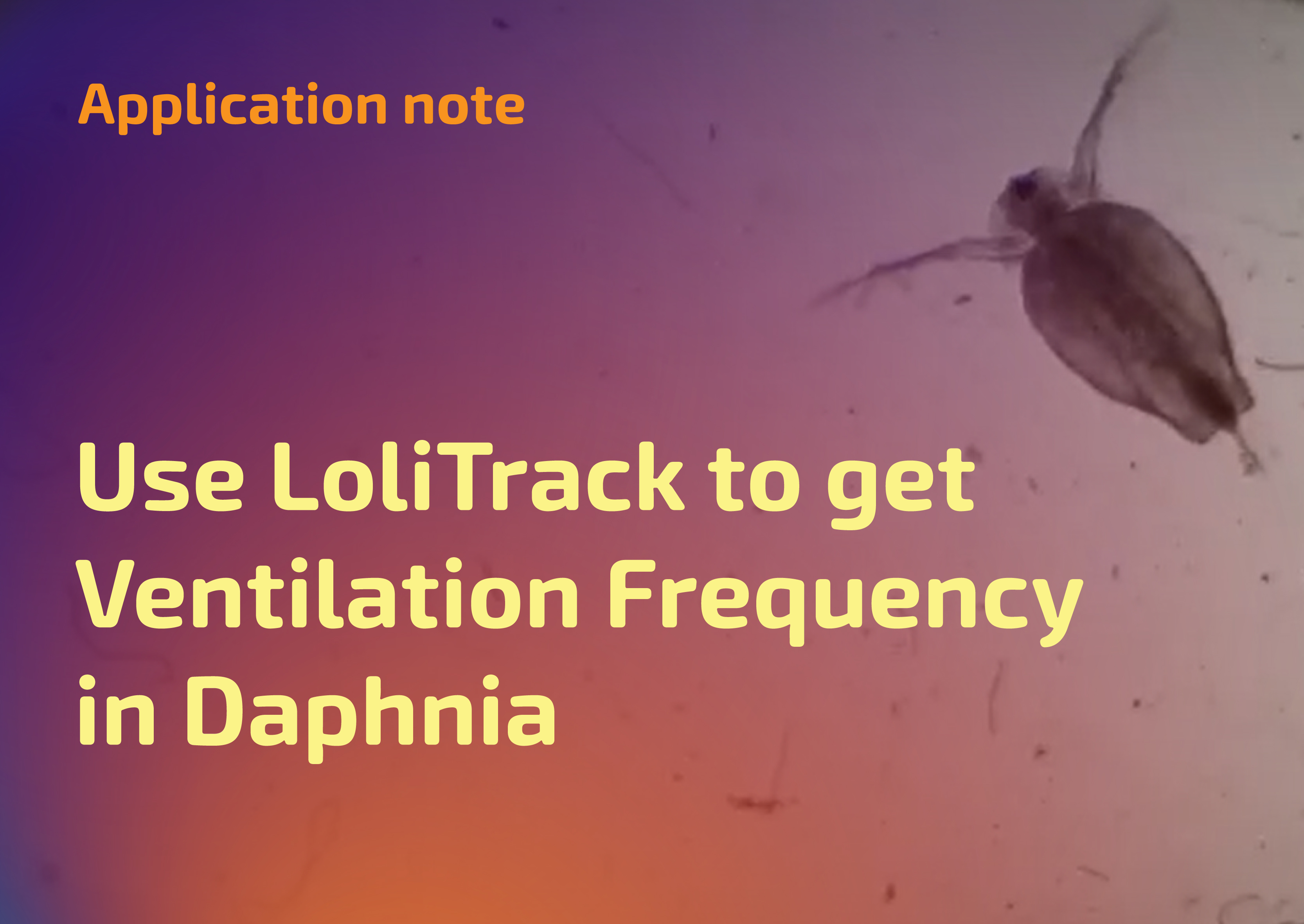
LoliTrack v5 Frequency Analyzer to Quantify Ventilation Frequency in Daphnia
Our video tracking and behavior analysis software LoliTrack v5 offers a range of different features to study animal movements and behavior. This includes tools to analyze and quantify frequencies in video images, e.g., Zebrafish heart rate, fish tail beat frequency, gill ventilation, insect stridulation, etc.
Here, we demonstrate how quick and easy it is to track and analyze the ventilation movements in a Daphnia:
We thank you Rorisang Malatsi and Dr Tarryn Lee Botha from the Department of Zoology at University of Johannesburg, for sharing the excellent video recording.
In these few steps, important physiological parameters such as thoracic limb activity, heartbeat rates and other pulsing movements in Daphnia or other small or large organisms can be quantified.
If you have videos showing stable pulsing movements, LoliTrack can quantify them.
For even more details on the automated frequency analysis tools of LoliTrack, see our video guide: LoliTrack 5 - How to use the Frequency analysis tool. This guide includes examples of quantification of heartbeat rate and estimation of stroke volume by a mahi mahi larvae and tail beat frequencies from the Brazilian fish Brycon amazonicus.
If you are interested, but unsure whether the software can analyze the frequency of your specific organism or target and video, please feel free reach out to our product specialist, Dr Louise Vinther Grøn. She will be happy to perform test analysis on your specific video in the software and help you evaluate the possibilities.
Tue, Aug 12 2025
New high precision system for well plate filming
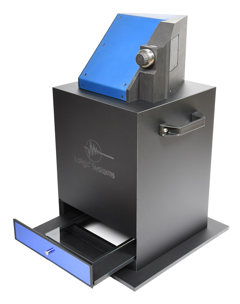
Enter the CentriTower system, a cutting-edge optical telecentric lens system designed to deliver high-resolution video images with zero parallax error and zero lens distortion. This innovative and compact system is perfectly suited for filming in PCR plates, deep well plates, petri dishes, and similar-sized vessels.
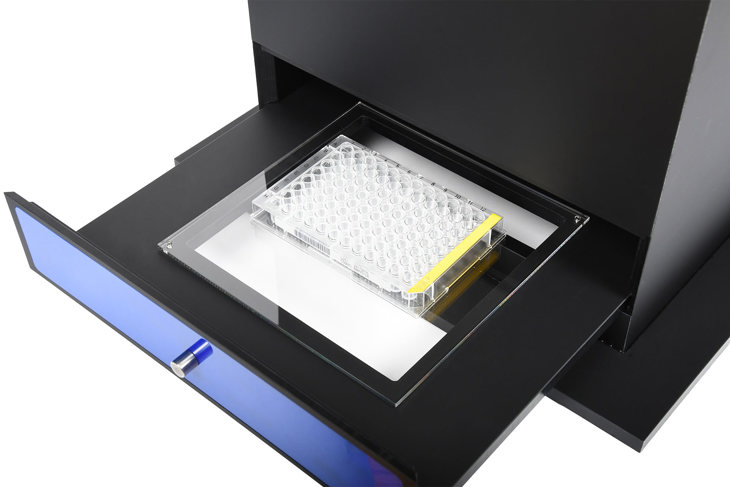
Researchers can now analyze the behavior of tiny, fast-moving organisms such as fish larvae, Daphnia, copepods, and Drosophila with exceptional clarity and precision. The system includes a 5 MP USB 3 camera with a C-mount, capable of capturing videos at up to 75 frames per second (FPS), ensuring that no detail is missed.
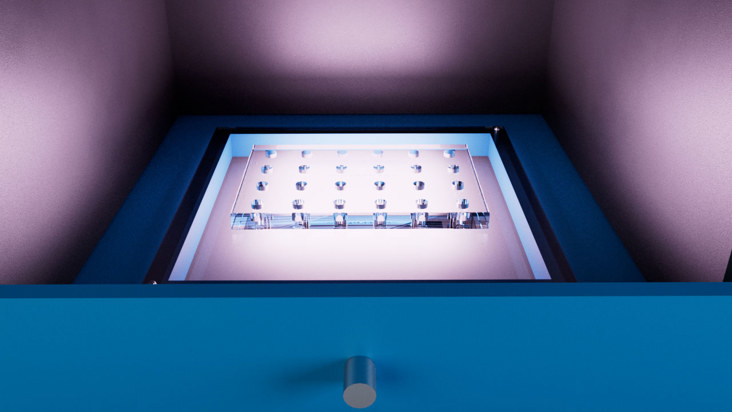
One of the standout features of the CentriTower system is its ability to block ambient lighting, thanks to its durable yet transportable tower design. This ensures consistent and reliable results by eliminating reflections and enhancing contrast. Additionally, the system includes an infra-red light panel for back illumination, which further improves video tracking performance without affecting the behavior of the test organisms.
The CentriTower system seamlessly integrates with our automated video tracking and behavior analysis software, LoliTrack v5 – a powerful combination of hardware and software allowing researchers to track and analyze behavior in small animals with ease.
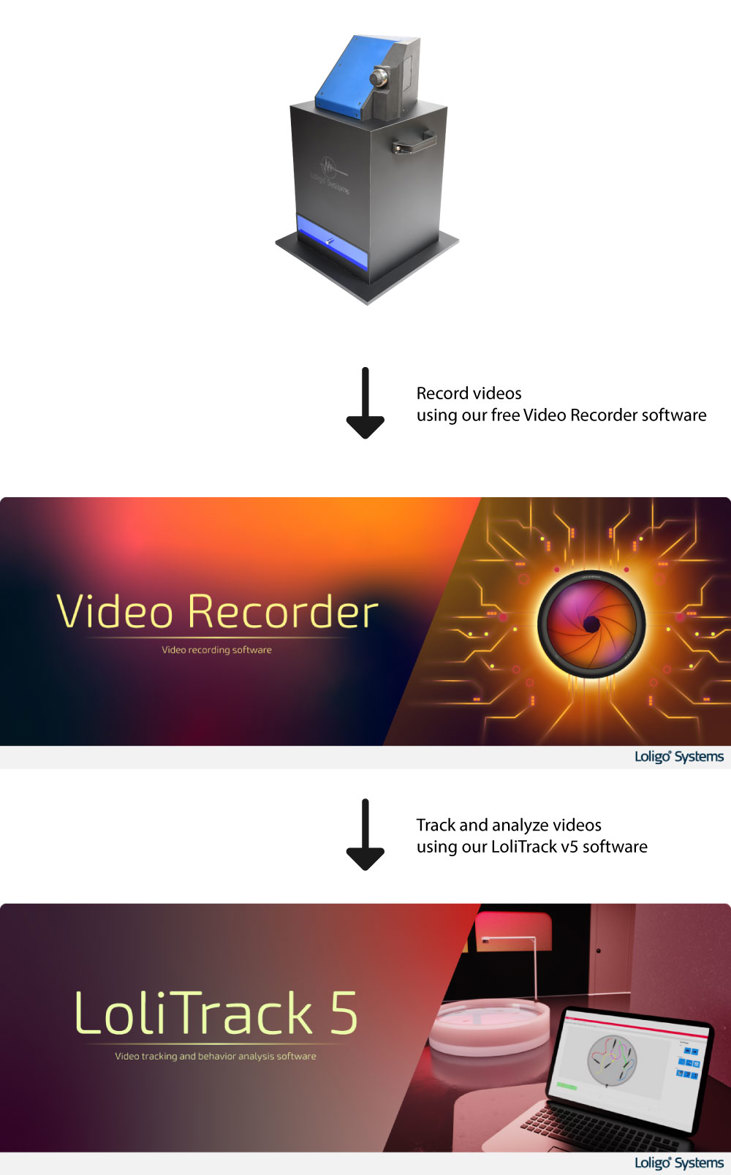
As the scientific community continues to push the boundaries of knowledge, the CentriTower system stands out as a vital tool for researchers seeking to gain deeper insights into the intricate behaviors of the natural world. With its top-quality optical components and user-friendly design, the CentriTower system is set to become an indispensable asset in laboratories around the globe.
The CentriTower can be bought as a separate product or as a system that includes LoliTrack v5 and an IR light panel.

Mon, Jul 28 2025
New Update – Video Recorder Version 1.2
We have released an updated version of our free Video Recorder software for recording and editing video files.
New features and improvements:
You can now adjust the video camera exposure time directly in the software. This is a great help when using various light panels for back illumination, e.g., as with our CentriTower system.
Another new feature is the ability to change the frame rate for two synchronized video cameras (e.g., for 3D tracking), rather than just for one at a time. Synchronized video files are now exported with distinct/different names, so that you can use them for 3D tracking, e.g., in LoliTrack.
You can download the latest version here:
The software continues to support most video cameras but offers more functionality if using our video cameras from IDS Imaging in Germany.
Please note that this version of Video Recorder is not compatible with the older uEye video cameras from IDS Imaging.

Sun, Jun 01 2025
Summer Holiday
Our office will be closed for the summer holiday from 12th - 27th of July (both days included).
We wish everyone a lovely summer!
The Loligo® team
Mon, May 26 2025
Respiration by microorganisms in suspension
The microplate respirometry system already have a long and well proven track record for providing high throughput oxygen consumption measurements in a range of different small organisms (e.g., Daphnia, Zebrafish embryos, marine invertebrate larvae, etc.).
In this application note, we demonstrate how the microplate system can also be applied for high throughput respiration measurements of microorganisms in suspension, here in corrosion samples dominated by the bacterium Acidithiobacillus thiooxidans.
Sulfide oxidation by A. thiooxidans at low pH can lead to the production of sulfuric acid, which is very problematic for concrete corrosion.
H2S+ 2O2 → H2SO4 (sulfuric acid)
As the sulfide oxidation is driven by an O2 reduction and consumption, this process can be investigated by following the change in O2 over time with the use of the microplate respirometry system.
The aim in this setup and demonstration was to investigate the inhibitory effect of nitrite on this sulfide oxidation under low pH (~ 2) in samples of concrete corrosion materials, using the microplate respirometry system.
Approach
Corroded concrete material, softened and structurally deteriorated as they have been exposed to microbial induced corrosion (expected to be dominated by A. thiooxidans), was mixed with water, sulfuric acid, sulfide and with different concentrations of nitrite (NaNO2). The samples were vortexed to mix and aerate the samples before being distributed across the glass microplate with 1,700 µL wells. To support continuous agitation, one glass bead was included in each well before the wells were filled with sample solution and sealed, and the plate and reader were placed on an orbital rotating shaker table.
After this, the change in the oxygen saturation in the 24 wells (with different nitrite concentrations) was monitored and logged using the MicroResp software. Below is an image of the results/output in the MicroResp software. The first column is the control wells (no nitrite added), and each of the subsequent columns are wells with increasing nitrite concentrations. The unit mg/L refers to mg NO2--N / L, which represents the concentration of the added nitrogen (N) in the form of nitrite (NO2-) in the samples.
These results clearly show that O2 consumption decreased with increasing nitrite concentration. In control wells and wells with lower nitrite concentrations, most O2 was consumed within one hour. For the highest nitrite concentrations, only limited O2 was consumed within one hour. These results demonstrate an inhibitory effect of increasing nitrite concentration on microbial oxygen consumption, and thus, that this microbial activity could be evaluated using the microplate system.
Based on the MicroResp data output, a figure like this can be created:

Figure created based on the MicroResp analysis software output. Well D1
excluded due to a trapped air bubble reoxygenating the sample.
This data output could be used to create dose response curves, here based on the first 30 minutes of monitored oxygen consumption:
Inhibition of oxygen consumption compared to controls (without added nitrite) at increasing
nitrite concentration after the first 30 minutes. Values are average of the four replicates ± 1 SD.
The microplate system was also used to investigate microbial oxygen consumption over a longer time frame, here for about 6 hours:

These experiments were carried out as a part of the master’s thesis work by Sune Popp Hinke and Line Gade Frahm together with Associate Professor Asbjørn Haaning Nielsen at the Department of the Built Environment, Aalborg University. A big thanks to all for testing our system to monitor microbial oxygen consumption.
Further insights on the project and challenges associated with acid formation, by Professor Asbjørn Haaning Nielsen:
This application note demonstrates how a microplate-based respirometry system can be used for high-throughput measurements of microbial respiration in concrete samples undergoing biogenic sulfuric acid (BSA) attack. Such environments are typically colonized by the acidophilic, sulfur-oxidizing bacterium Acidithiobacillus thiooxidans, a key driver of BSA.
At the low pH characteristic of BSA-affected concrete surfaces, A. thiooxidans oxidizes hydrogen sulfide (H₂S) to sulfuric acid (H₂SO₄):
H2S+2 O2 → H2SO4
The acid aggressively dissolves the calcium-rich cement matrix, forming gypsum and ettringite whose expansion leads to cracking and loss of structural integrity. The microplate system enables rapid, parallel monitoring of oxygen consumption, providing high-resolution insight into sulfur-oxidizing activity directly in BSA-affected concrete. In the present study, we examine how nitrite inhibits the BSA process by reducing the sulfur-oxidizing activity of A. thiooxidans and thereby slowing sulfuric acid generation.
If you too are interested in the microplate respirometry system for oxygen consumption rate measurements in suspensions of bacteria, algae, yeast, protozoa etc., please reach out to our product specialist Dr Louise Vinther Grøn (lvg@loligosystems.com), who will be happy to discuss your experimental needs and considerations.
We are looking forward to seeing even more studies on microbial oxygen consumption with the use of the MicroResp system in the future.